

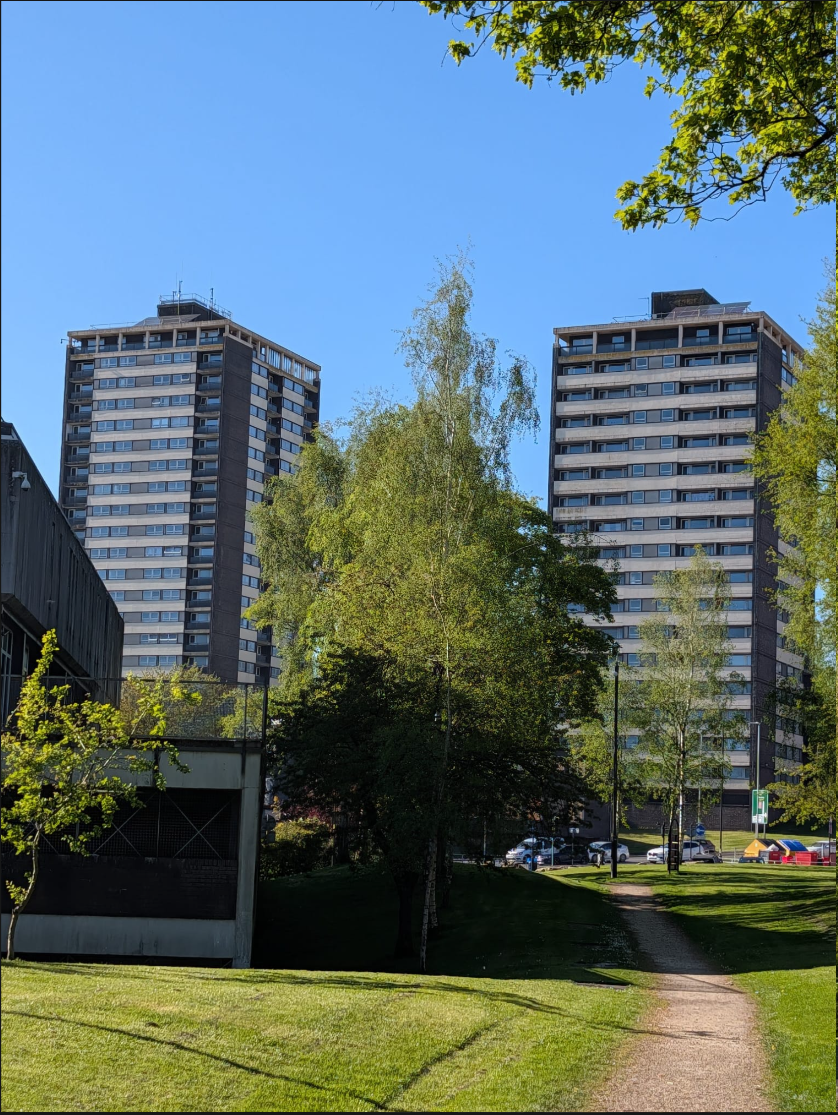
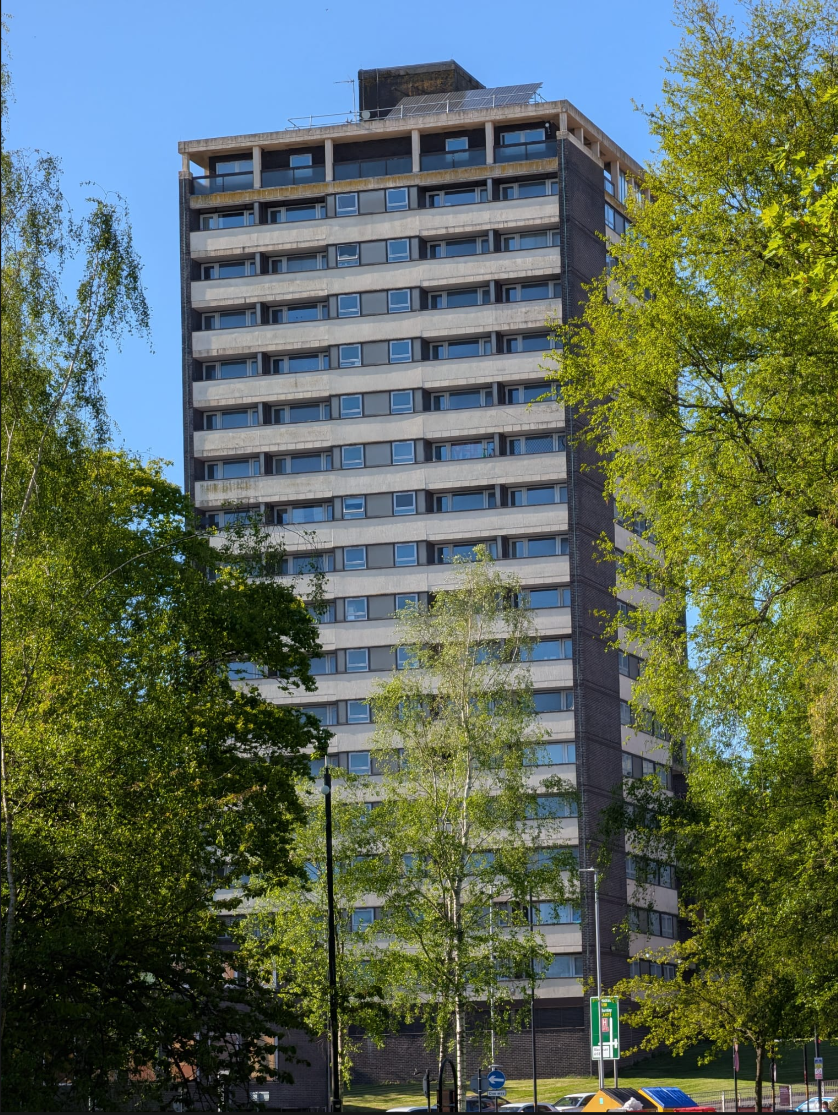
Uncertainty over the future of Rochdale’s Seven Sisters tower blocks has deepened after residents evacuated from Mitchell Hey were told they will not be returning to their homes.
Rochdale Boroughwide Housing (RBH) has confirmed that the block at College Bank will remain closed following a water main failure in March, which led to the emergency evacuation of the seven occupied flats.
The decision has raised concern among residents and campaign groups, who say it may signal a broader shift in the long-running debate over the future of the estate.

The evacuation took place on 6 March after a loss of water supply made the building uninhabitable. While initially treated as a temporary measure, RBH has since confirmed that the closure will be permanent, citing difficulties in securing a contractor to carry out the required repair work.
Residents affected by the evacuation have described ongoing disruption since leaving their homes. Many have been placed in temporary accommodation, including hotels and short-term lets, with uncertainty around their longer-term housing arrangements. Some have raised concerns about the impact on their wellbeing, routines and connections to the local community.
For those who have lived in College Bank for many years, the displacement represents more than a change of address, affecting established support networks and a sense of stability built up over time.
RBH has said that safety considerations were the primary reason for both the evacuation and the decision not to allow residents to return. The housing association states it has provided support to those affected, including accommodation, meals and assistance in finding alternative housing.
A spokesperson said the organisation had worked to support residents through what it described as a difficult and distressing situation.
RBH has also stated that no final decision has been taken on the long-term future of the College Bank estate. According to the housing association, options such as refurbishment remain under consideration, although any major works would require residents to move out due to the age and condition of the buildings.
Campaigners, however, say the closure of Mitchell Hey should be viewed in the context of earlier announcements about the estate. In October 2024, RBH said all residents would need to relocate within 18 months. The decision not to reopen the block has led to concerns that this timetable may effectively be accelerating.
The Save the Seven Sisters campaign group has questioned whether current actions are consistent with earlier statements that no final decision has been made. The group points to previous proposals to demolish parts of the estate in 2017, the decision to rule out demolition in 2023 following opposition, and the reintroduction of all options in 2024.
Alternative proposals have also been put forward by the Greater Manchester Tenants Union, which has outlined plans to retain and update the existing buildings. These proposals have not been formally adopted, and their status remains unclear.
Rochdale MP Paul Waugh has raised concerns about the underlying causes of the situation, pointing to what he described as long-term maintenance issues. He said the infrastructure problems leading to the evacuation should have been addressed earlier, raising wider questions about investment in the estate.
The Greater Manchester Combined Authority’s College Bank Taskforce, established to explore funding options for potential refurbishment, has not provided any recent update on its work. For residents and campaigners, this lack of clarity has added to ongoing uncertainty.
The council has said it intends to secure alternative permanent housing for affected residents by the end of the year. However, for many, the situation remains unresolved, particularly for those who had expected to return to their homes.
The closure of Mitchell Hey marks a significant moment in the future of the Seven Sisters blocks. While RBH maintains that safety concerns have driven its decisions, campaigners argue the situation raises important questions about transparency, long-term planning and the direction of travel for the estate.
What happens next—whether refurbishment, redevelopment or demolition—remains undecided. For residents already displaced, however, the immediate reality is one of continued uncertainty.